
海军码头景观设计
发布于:
Great Pier of the Great Lakes
位置:美国
分类:滨水
内容:设计方案
图片:14张

景观设计:!melk
景观时间:2012年
芝加哥以从“不做小计划”而文明世界,这一战略观点是Daniel Burnham 在一个多世纪以前提出来的。今天,芝加哥希望将其最受欢迎的海军码头打造成为世界级的文化旅游胜地正是这一风格的体现。为了帮助芝加哥实这一雄心勃勃的设计目标,!melk, UrbanLab 和 HOK共同提出了一系列新奇的设计方案。
整个设计团队由!melk设计事务所的首席设计师Jerry Van Eyck所带领。Van Eyck曾在世界各地做过大量尖端的景观规划设计项目,此次重振芝加哥的文化地标海军码头正是Van Eyck所擅长的。
!melk设计团队的设计构思来自于芝加哥独特的地质历史。冰河时代的冰川融化不仅形成了五大湖景区这样波澜壮阔的自然景观,同时也留下了小型的的标志景观或整个区域的标志性景观。 !melk设计团队通过仔细研究这些独特的自然现象来设计出一系列的景观元素,运用地形创造运动空间、社交空间、景观节点、活动空间等,并将自然和艺术融合在一起。
设计团队深信要领略五大湖的壮丽风景,人们必须要离得它很近才可以,因此他们找到了一些方法来使人们感受到五大湖强大的力量。
首先他们提出了一个以“冰川”为基本构想的大胆的水体设计方案。 高大的构筑物上设计了垂直的瀑布,等到了冬天,巨大的瀑布凝结成冰川一定会吸引全世界的目光。 还有一处海拔较低的“观鱼胜地”(“Fish Resort”)同样引人的注目。 它是芝加哥现有的“观鱼”酒店的一个放大版本,已经成功的吸引了不同大小的鱼类和不同年龄段的游客。 设计团队希望“观鱼胜地”能够成为与海豹观赏点同样吸引人的景点。
!melk设计团队同样也制定了加强海军码头与芝加哥联系的计划。目前,海军码头在许多生活在芝加哥的人眼中是一个遥远的地方。设计团队通过打造高度互联的新空间、新项目来加强两者之间的联系。此外,芝加哥可能还需要为海军码头提供可持续发展的经济。这是一项长期的目标,预计需要经过多个阶段才能逐步实现。 此次设计的短期目标是吸引芝加哥人,使他们觉得海军码头是一个至关重要并且独特的城市。
译者: 饭团小组
Chicago is known for its penchant to “make no little plans” as Daniel Burnham memorably pronounced over a century ago. And so today, Chicago’s most popular attraction, Navy Pier is revisiting Burnham’s legacy as it reimagines its potential as a world class cultural destination. To help realize Navy Pier’s ambitious design goals, a team led by !melk, UrbanLab and HOK has proposed a series of dramatic ideas to reconceptualize Chicago’s preeminent exclamation point extending from the Great Lakes to the world.
The design team is headed by !melk principal Jerry Van Eyck, a former partner of the renowned Netherlands based landscape and urban design firm West 8. Van Eyck has realized numerous cutting-edge landscape-centered projects around the globe. Reinvigorating cultural landmarks such as Navy Pier into dynamic places that attract worldwide attention is exactly what Van Eyck knows how to do.
Team !melk’s design proposal stems from the geological history that formed the unique Chicago and Great Lakes landscape. The melting mile-thick glaciers of the last Ice Age left not only the five Great Lakes, but also left behind smaller marks on the landscape, or landmarks throughout the region. The swell and swale landmarks imprinted on the landscape such as drumlins, kames, moraines, eskers and kettles are spectacular forms. Team !melk works with these unique natural phenomena to create a series of topographic waves and curls that smoothly unify the once highly fragmented Pierscape. The new topography also creates and opens surprising movements, social spaces, vistas, observation points, places for activities, contact with nature, and art.
The design team strongly believes that to appreciate the magnitude of the Great Lakes people must get close to them…and then get even closer. This closeness is at the heart of their approach. The team has found several ways to inspire people to experience the power of the Great Lakes in multiple states.
The team’s boldest water-based design proposal is the “Glacier”. The icon embraces water in all its states, especially in the winter when onboard waterfalls create flows of ice freezing the tower into a glacier. It will surely become the next must-see global attraction. A less monumental but equally compelling water-based design feature includes a “Fish Resort”. This is a much larger version of Chicago’s existing “fish hotel”, which has been a successful attractor of both fish and people of all ages and sizes. The team is hopeful that the Fish Resort will become an attraction equal in popularity to seal watching on Pier 39 in San Francisco (Pier 39 receives twice the number of yearly visitors than Navy Pier largely based on the presence of the seals).
Team !melk is also making plans to strengthen Navy Pier’s connection back to the urban fabric of Chicago. Currently, many people living in Chicago have the impression that Navy Pier is a far-off destination rather than a place to visit routinely. The design team is recalibrating this scenario with highly interconnected new spaces and programs authentic to Chicago. The team has redesigned Gateway Park – the primary physical connection back to the city – with a new public plaza housing several new potential programmatic and cultural venues.
Providing economic sustainability to Navy Pier is the long term goal, and these ideas will likely happen over multiple phases. The short term goal is to attract Chicagoans by making them feel as though Navy Pier is a vital slice of a unique city.
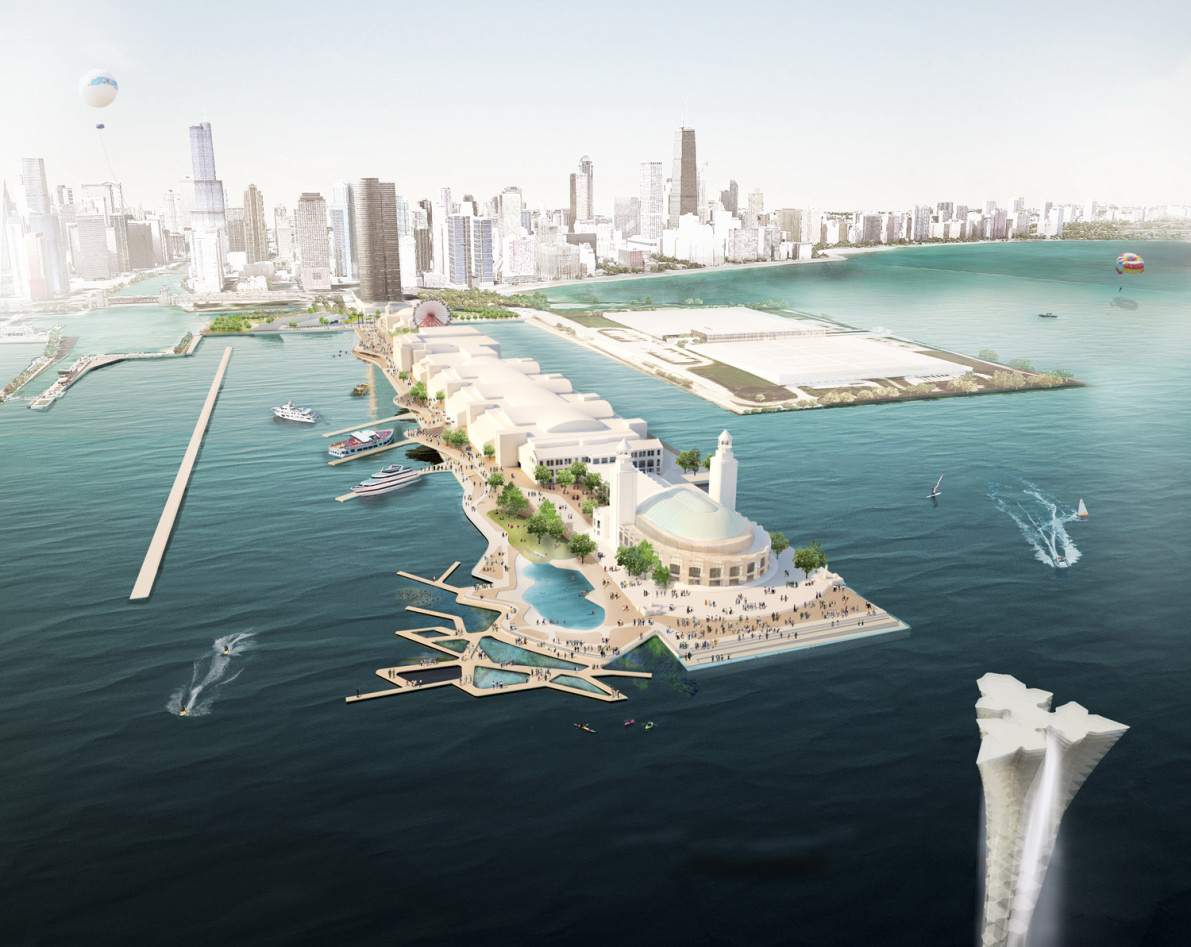
海军码头景观设计外观图

海军码头景观设计局部图

海军码头景观设计局部图

海军码头景观设计局部图

海军码头景观设计

海军码头景观设计

海军码头景观设计

海军码头景观设计

海军码头景观设计

海军码头景观设计

海军码头景观设计

海军码头景观设计

海军码头景观设计
海军码头景观设计外观图

海军码头景观设计局部图

海军码头景观设计局部图

海军码头景观设计局部图

海军码头景观设计

海军码头景观设计
本文来源网络,版权归原作者所有,如有侵权请联系删除