
丰塔内拉托的竹子迷宫/franco maria ricci
发布于:
Mr Rato feng tower maze of bamboo
设计方:franco maria ricci
位置:意大利
分类:园林小品
内容:实景照片
图片来源:franco maria ricci
图片:9张
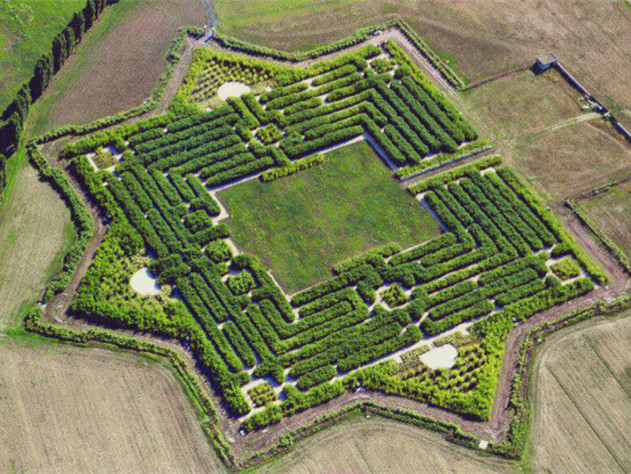
意大利艺术品收藏家和藏书家 佛朗哥·玛丽亚·里奇(franco maria ricci)在FMR杂志上写道,他在丰塔内拉托(fontanellato)的乡间的家中创造了世界上最大的迷宫。经过将近八年的建设,这座迷宫将在今年晚些时候向大众开放。
迷宫总占地面积大约为17英亩的土地,里面的植物完全由竹子的几个品种构成。佛朗哥·玛丽亚·里奇认为竹子是一种了不起的植物,它没有常见疾病,而且还具有净化空气中的二氧化碳、以及冬季常绿等特点。
竹子组成的绿篱高约5 m ,种植在一个300m×300m的四方形场地内。这些茂盛的竹子在几年后会成为场地中重要的景观元素,与河岸峡谷景观一起形成独具特色的乡村景观。
这个构成复杂的迷宫中包含了超过54000平方英尺的文化空间,其中包含了佛朗哥玛丽亚里奇的艺术收藏(约500件从1500年代到20世纪的艺术品)和一个图书馆。这一图书馆致力于收藏一些最杰出的和著名的书籍作品,其中包含了吉安•巴蒂斯塔•博多尼和阿尔贝托的大部分作品。
在迷宫的中心是一个22000平方英尺的广场,广场的周围由柱廊围合。宽敞的广场空间将成为音乐会、聚会、展览和其他文化活动的举办场地。广场一侧还有一个金字塔形的教堂俯瞰整个广场,给这一场地赋予宗教特色。建筑中将会有两个简单的餐厅:为游客提供具有当地特色的事物(如火腿、蛋糕等等)。
译者: 饭团小组
when the italian art collector and bibliophile franco maria ricci left the helm of his extraordinary publishing house, he told the readers of FMR magazine, quoting voltaire, ‘laissez-moi cultiver mon jardin’.he’s created is a monumental maze, far and away the largest labyrinth on the globe, at his country home in fontanellato, just outside of parma, italy. the ‘labirinto della masone’ is a cultural park, designed together with the italian architects pier carlo bontempi and davide dutto. eight years have passed since the work first began, and it is now about to end — it will open later this year.
the labyrinth, which takes up seventeen acres of land, has been built entirely out of several varieties of the bamboo plant. ‘I’ve chosen 120,000 plants of diverse varieties – bamboo it is a remarkable plant, which carries no disease, does not lose all its leaves in the winter, purifies the air of carbon dioxide…‘ says franco maria ricci.
‘the franco maria ricci foundation, which the labyrinth belongs to and which has the task of ensuring its continuity, has a statute, in which two goals are stated: to preserve and promote knowledge of the works and housed inside the museum and the library; and to safeguard the landscape based on criteria that are not merely conservative. one of the ambitions that drives me is that of fostering a union between two things that seem to be made for each other: bamboo and the po valley.‘ franco maria ricci
some of the hedges grow to a height of 5 m — planted in a 300 m-sided square making for 3 km of pathways. I would be happy if, in a few years, this plant were to become an important element in the po valley landscape, and our entrepreneurs were to get into the habit of using the delicate curtains of my bamboo plants to disguise some of the ugly industrial warehouses that sadly line our streets and highways. my foundation will supply them with the plants they need, and provide a consultancy service. and there is one more ambitious but important initiative I’d like to mention: the summer school of art, especially for foreigners, whose purpose will be to divulge the wealth of art and the heritage of the land surrounding parma by way of lessons and guided tours.‘ franco maria ricci
the cretan labyrinth has seven circuits; the roman labyrinth features right angles and is divided into quadrants;the church labyrinth has eleven circuits, like that of chartres. franco maria ricci chose to use the second type – there is a center and a star-shaped perimeter with four interconnected labyrinths. it’s symbolic of man’s journey through life, from ignorance to enlightenment, and the plan of overlapping squares retraces that of the star forts first drafted by michelangelo to defend florence.
the labyrinth complex includes cultural spaces of more than 54,000 square feet in size, which will house franco maria ricci’s art collection (around 500 works of art from the 1500s up to the twentieth century) and a library dedicated to some of the most illustrious and famous examples of typography and art, including many pieces by gian battista bodoni and the complete works of alberto tallone. all of the books created and edited by franco maria ricci over his fifty year career will also be included in the collection.
at the center of the labyrinth, lies a piazza of 22,000 square feet, surrounded by colonnades. generously proportioned salons will be the venue for concerts, parties, exhibitions, and other cultural events. a pyramid-shaped chapel overlooking the piazza will serve as reminder of the labyrinth as a symbol of faith. there will be two restaurants: a simple, conveniently priced one, where local specialties can be savored (good prosciutto, torta fritta, and much more), and another one whose aim will be to make sure its customers remember it for the setting as well as for the service and the cooking. for visitors there will also be a food area selling traditional parma products, and a bookshop selling rare books published by franco maria ricci during his career.
there were marvelous gardens in the period before the renaissance. monasteries had a ‘hortus conclusus’, a garden for meditation and prayer. open-air cells where the praying person could receive visits from other creatures of GOD, such as the birds, the butterflies, and worms. there were also profane gardens in palaces and castles. if one travels around europe, it is still possible to visit many ancient gardens and labyrinths, although only a few of them have kept their original form.
in italy, there are two relatively well-preserved labyrinths, both of which are not far from padua and both mostly loyal to their early version: one is in villa barbarigo in valsanzibio, dated to the mid-seventeenth century, and the other is in villa pisani in stra, created around 1720. the nineteenth as well as the early twentieth centuries were a bleak time for labyrinths. some had already been destroyed. others were abandoned and overgrown with weeds. the men who had built those intrigues, as the reflection of their glory and their dreams, had died.
together with grottoes and nymphaeums, gardens and labyrinths are among humanity’s most ancient fantasies. the garden, or eden – which was so beautiful that adam and eve, newly created, kept rubbing their eyes in disbelief – is the embodiment of innocence as well as happiness. instead, the labyrinth is a source of bewilderment: it is a reflection of the confusing experience we have of reality and the effort we must make to live out our daily lives. all this has also become a book.’ franco maria ricci

丰塔内拉托的竹子迷宫外观图

丰塔内拉托的竹子迷宫外部局部图

丰塔内拉托的竹子迷宫内部局部图

丰塔内拉托的竹子迷宫内部局部图

丰塔内拉托的竹子迷宫

丰塔内拉托的竹子迷宫模型图

丰塔内拉托的竹子迷宫图解

丰塔内拉托的竹子迷宫图解

丰塔内拉托的竹子迷宫外观图

丰塔内拉托的竹子迷宫外部局部图

丰塔内拉托的竹子迷宫内部局部图

丰塔内拉托的竹子迷宫内部局部图

丰塔内拉托的竹子迷宫

丰塔内拉托的竹子迷宫模型图

丰塔内拉托的竹子迷宫图解

丰塔内拉托的竹子迷宫图解
本文来源网络,版权归原作者所有,如有侵权请联系删除