
德国的滑梯钟塔/Carsten Höller
发布于:
Germany's slide clock tower
位置:德国
分类:园林小品
内容:实景照片
景观设计:Carsten Höller
图片来源:julien lanoo
图片:7张

Carsten Höller建造了一个30.7米高的滑梯塔。这个滑梯塔是家具设计公司的艺术作品,希望能够在weil am rhein地区的Vitra校园的建筑群中建造一个特殊别致的构筑物。在和校长及顾问团商议之后决定构筑物需要充分结合当代艺术,因此选择了眼光独到的Carsten Höller 作为设计师。为了强调校园的地形,这个构筑物共有三条对角线上的管道通达最上方的时钟。这个时钟有六米的直径,在远方也能看清,夜晚装有照明设施。对角线的方向让人们怀疑时钟的十二点是否是垂直方向。时钟没十二小时会在Vitra的标志处停留一下,它以自己的轴旋转,并不方便读取时间。
这个滑梯塔有两条通往顶端的通道,并被三条支撑管道穿过。在17米处有一个观景平台。这个平台也是一个38米长的旋转滑梯起点,让人们有不同的体验。Carsten Höller说:“你可以进入滑梯进行体验,但并不强迫你去使用它。在外围观察这个塔也是一种有价值的经历。滑梯能够和电梯或台阶一样让人们快速地到达目的地。它并不昂贵,能舒缓人们的心情。”
译者:Jevin
carsten höller has erected a 30.7-metre-high structure on the vitra campus in weil am rhein, germany. the ‘vitra slide tower’ is the result of the furniture company’s objective to envision a work with an artist that would fit into the overall plan of the site – something that would be able to distinctively stand alone amidst the powerful architecture already existing on the campus without being closed off and self-contained. discussions between rolf fehlbaum, chairman of vitra, and his advisor theodora vischer, well versed in contemporary art, led them to select carsten höller who is known for engaging the participation of his viewers through site-specific installations that alter one’s perception of the space around them.
reinforcing the topographic reorientation of the vitra campus scheme, the free-standing interactive sculpture is composed of three diagonal columns that taper upwards, meeting at the top where a revolving clock is found. mounted on the poles’ points, the timepiece measures 6-metres in diameter and is visible from a distance, illuminated by night, but is void of any numbers. its diagonal orientation makes it unclear as to whether the hour mark that is vertically located at the top indicates twelve o’clock, or rather the point that corresponds to the diagonal angle at which the columns stand. every twelve hours the hands will form the vitra logo for a few brief moments. in addition, it rotates on its own axis, thematically addressing time, but not facilitating a practical reading of it.
the ‘vitra slide tower’ is accessed via a double-flight staircase that is fitted into the slanted supports with intermediate landings interrupting its path. at 17-metres-high, an observation deck is offered for visitors to pause at and take in the surrounding landscape. this platform also stands as the starting point for a 38-metre-long corkscrew tube slide, inviting an alternative way to descend its verticality.
a slide is a sculptural work with a pragmatic aspect, a sculpture that you can travel inside. however, it would be a mistake to think that you have to use the slide to make sense of it. looking at the work from the outside is a different but equally valid experience, just as one might contemplate the endless column by constantin brancusi from 1938. from an architectural and practical perspective, the slides are one of the building’s means of transporting people, equivalent to the escalators, elevators or stairs. slides deliver people quickly, safely and elegantly to their destinations, they’re inexpensive to construct and energy-efficient. they’re also a device for experiencing an emotional state that is a unique condition somewhere between delight and madness. it was described in the fifties by the french writer roger caillois as ‘a kind of voluptuous panic upon an otherwise lucid mind’.’ – carsten höller
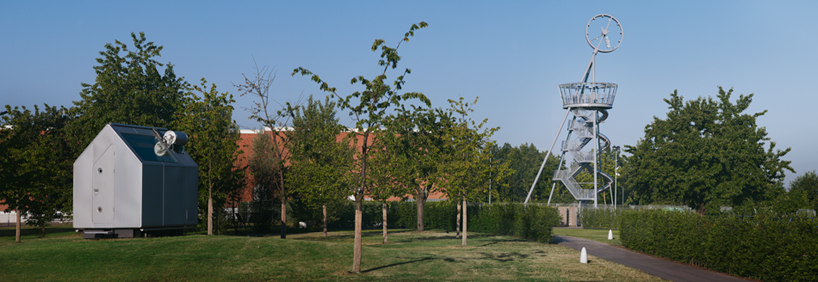
德国的滑梯钟塔外部图
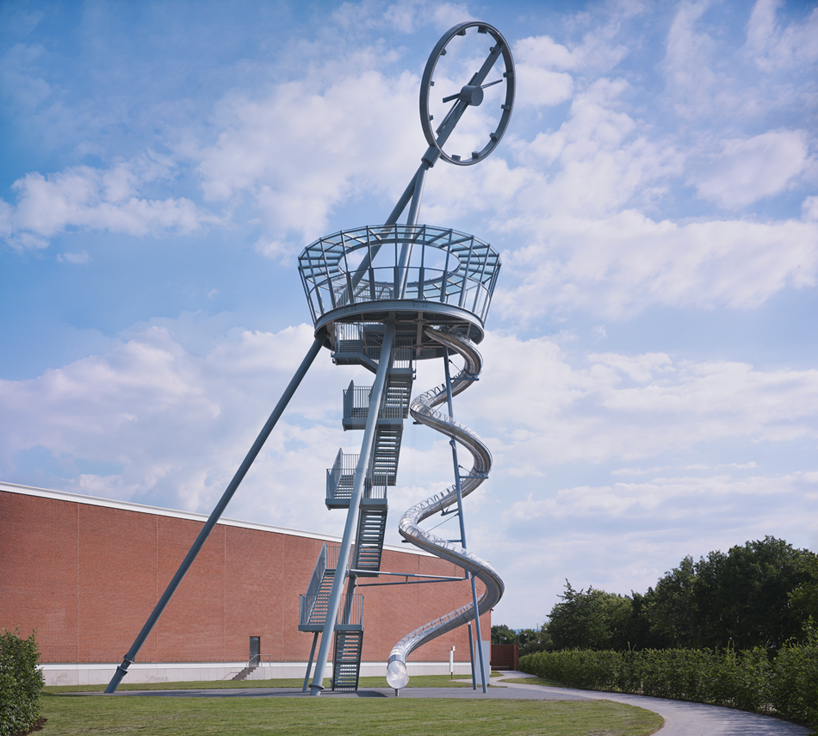
德国的滑梯钟塔外部图
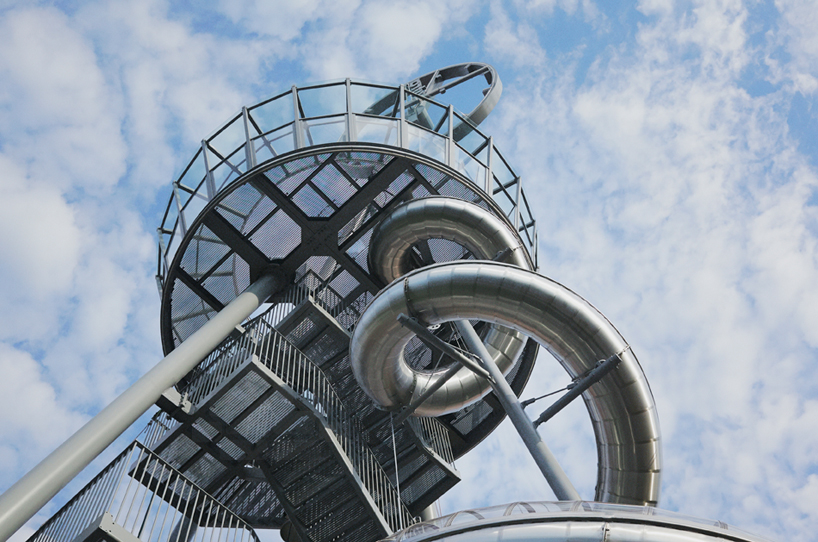
德国的滑梯钟塔外部图
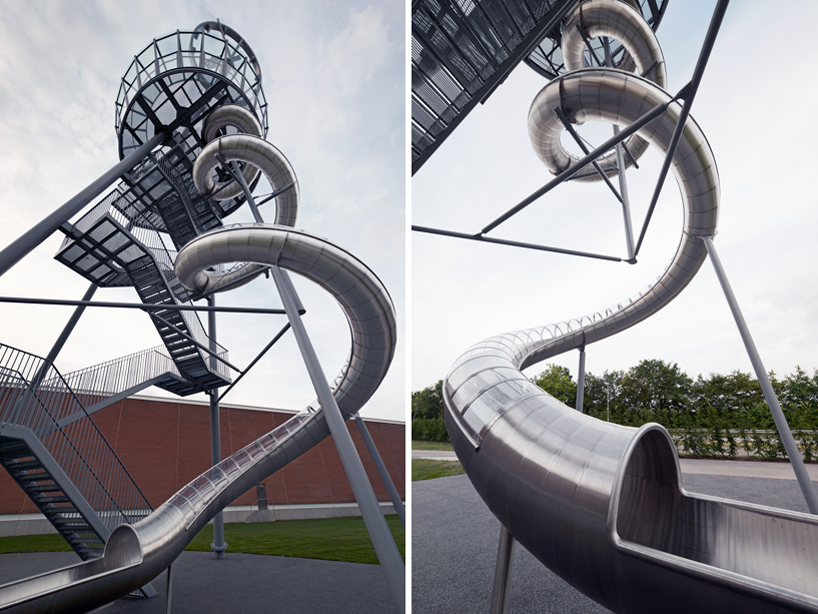
德国的滑梯钟塔外部图

德国的滑梯钟塔外部图

德国的滑梯钟塔
德国的滑梯钟塔外部图
德国的滑梯钟塔外部图
德国的滑梯钟塔外部图
德国的滑梯钟塔外部图
本文来源网络,版权归原作者所有,如有侵权请联系删除