
德国斯图加特的亭子/ICD-ITKE
发布于:
Stuttgart Germany pavilion
设计方:斯图加特大学建筑和城市规划学院
位置:德国
分类:园林小品
内容:实景照片
图片来源:ICD-ITKE
项目规模:29平方米
图片:23张

2012年11月,斯图加特大学计算机设计学院和建筑与结构设计学院建造完成了一个实验亭,此亭子完全由碳和玻璃纤维复合材料机械制造而成。此跨学科项目是由两个学院的建筑工程研究员以及学院学生和图宾根大学的生物学家合作完成。项目探究了仿生设计和新的机器生产工艺之间的内在联系。实验注重节肢动物外骨骼作为的建筑复合结构样本的材料及形态学原理。
项目的核心部分是建筑业大环境下的一个创新型机器制造过程,这个过程是基于碳和玻璃纤维复合材料的使用以及相关的计算机设计工具和仿真法。项目的关键部分是将此生物模型的纤维形态转化成强化纤维的复合材料,各种材料的特质由于计算机设计和仿真法的使用而结合在了一起,从而形成了新的建筑构造。结构生成方法、计算机仿真和机器制造技术的结合使得建成的建筑结构性能极高:亭子外壳复合层压板仅有4毫米厚却能支撑这个高达八米的结构。
译者: 柒柒
In November 2012 the Institute for Computational Design (ICD) and the Institute of Building Structures and Structural Design (ITKE) at the University of Stuttgart have completed a research pavilion that is entirely robotically fabricated from carbon and glass fibre composites. This interdisciplinary project, conducted by architectural and engineering researchers of both institutes together with students of the faculty and in collaboration with biologists of the University of Tübingen, investigates the possible interrelation between biomimetic design strategies and novel processes of robotic production. The research focused on the material and morphological principles of arthropods’ exoskeletons as a source of exploration for a new composite construction paradigm in architecture.
At the core of the project is the development of an innovative robotic fabrication process within the context of the building industry based on filament winding of carbon and glass fibres and the related computational design tools and simulation methods. A key aspect of the project was to transfer the fibrous morphology of the biological role model to fibre-reinforced composite materials, the anisotropy of which was integrated from the start into the computer-based design and simulation processes, thus leading to new tectonic possibilities in architecture. The integration of the form generation methods, the computational simulations and robotic manufacturing, specifically allowed the development of a high performance structure: the pavilion requires only a shell thickness of four millimetres of composite laminate while spanning eight metres.

德国斯图加特的亭子外部实景图

德国斯图加特的亭子外部实景图

德国斯图加特的亭子外部实景图

德国斯图加特的亭子外部实景图

德国斯图加特的亭子外部实景图

德国斯图加特的亭子外部实景图
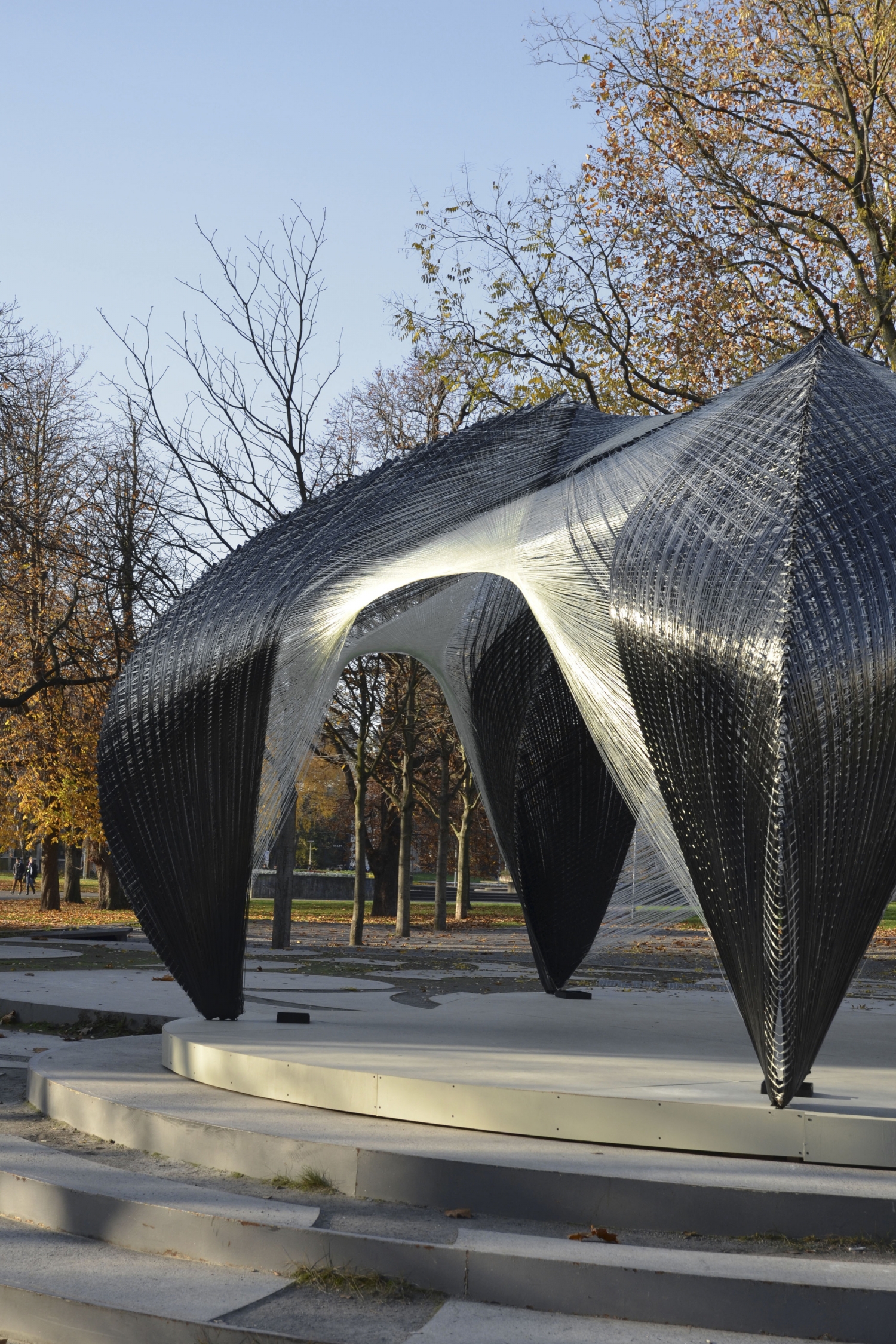
德国斯图加特的亭子外部局部实景图

德国斯图加特的亭子外部局部实景图

德国斯图加特的亭子外部细节实景图

德国斯图加特的亭子外部细节实景图

德国斯图加特的亭子外部细节实景图

德国斯图加特的亭子外部细节实景图

德国斯图加特的亭子外部细节实景图

德国斯图加特的亭子外部细节实景图

德国斯图加特的亭子外部细节实景图

德国斯图加特的亭子外部夜景实景图

德国斯图加特的亭子外部夜景实景图

德国斯图加特的亭子外部夜景实景图

德国斯图加特的亭子位置图

德国斯图加特的亭子立面图

德国斯图加特的亭子剖面图

德国斯图加特的亭子剖面图

德国斯图加特的亭子外部实景图

德国斯图加特的亭子外部实景图

德国斯图加特的亭子外部实景图

德国斯图加特的亭子外部实景图

德国斯图加特的亭子外部实景图

德国斯图加特的亭子外部实景图
德国斯图加特的亭子外部局部实景图

德国斯图加特的亭子外部局部实景图

德国斯图加特的亭子外部细节实景图
本文来源网络,版权归原作者所有,如有侵权请联系删除